

A Summer Miscellany
flowers in the vase of summer

The Scottish summer is different from what my American self is accustomed to. Cool days with delectably long hours of sunlight, constant sea breezes, a rainbow of flowers. It’s what I never thought summer could be, pleasing to the senses and a delight to inhabit.
“And God is as willing to save man as he is powerful and wise; for Christ himself…has taught us to do good in return for evil. Here we can see that he is himself this love and acts towards us as he teaches us to do; for he wants us to be like him in oneness of unending love toward ourselves and toward our fellow Christians. No more than his love towards us is withheld because of our sin does he wish that our love be withheld from ourselves and our fellow Christians…”
Julian of Norwich, Revelations of Divine Love, trans. Barry Windeatt (Oxford World’s Classics, 2015), short text, 25.
There’s a smell scape to my daily walks in St Andrews: coffee and breakfast scents from the newsagent, the funk of the harbor at low tide, fish sticks frying in the posh school, fresh laundry from student accommodations, pancakes from the cafe, the ambrosial rosebush in the churchyard.

To celebrate a few milestones and take advantage of living in Europe, my husband and I tour France: Paris, Normandy, and Provence. My childhood Francophile (ballet! Madeline! Audrey Hepburn movies!) is in heaven, and my adult self is chuffed with how much I remember from high school French (and/or grateful for the Norman Conquest’s impact on English). I visit the Parisian embroidery store I have long loved from afar and work on my Monet shawl.1


Our first stop was Notre Dame, in which the crowds overwhelm me with the realization that God knows intimately the heart and mind of each person there, and everywhere. I could not remember the names of all the people in the church if I had met them all, nor could I hold their stories. Yet God knows and loves each one.
We ride train after train, which is quality staring-out-the-window time. Somehow, even during a heat wave, Paris lives up to the hype (which I dared not hope). We visit cathedrals and marvel at medieval craftsmanship and have lavender ice cream and scheme up a cozy mystery series set in Normandy.
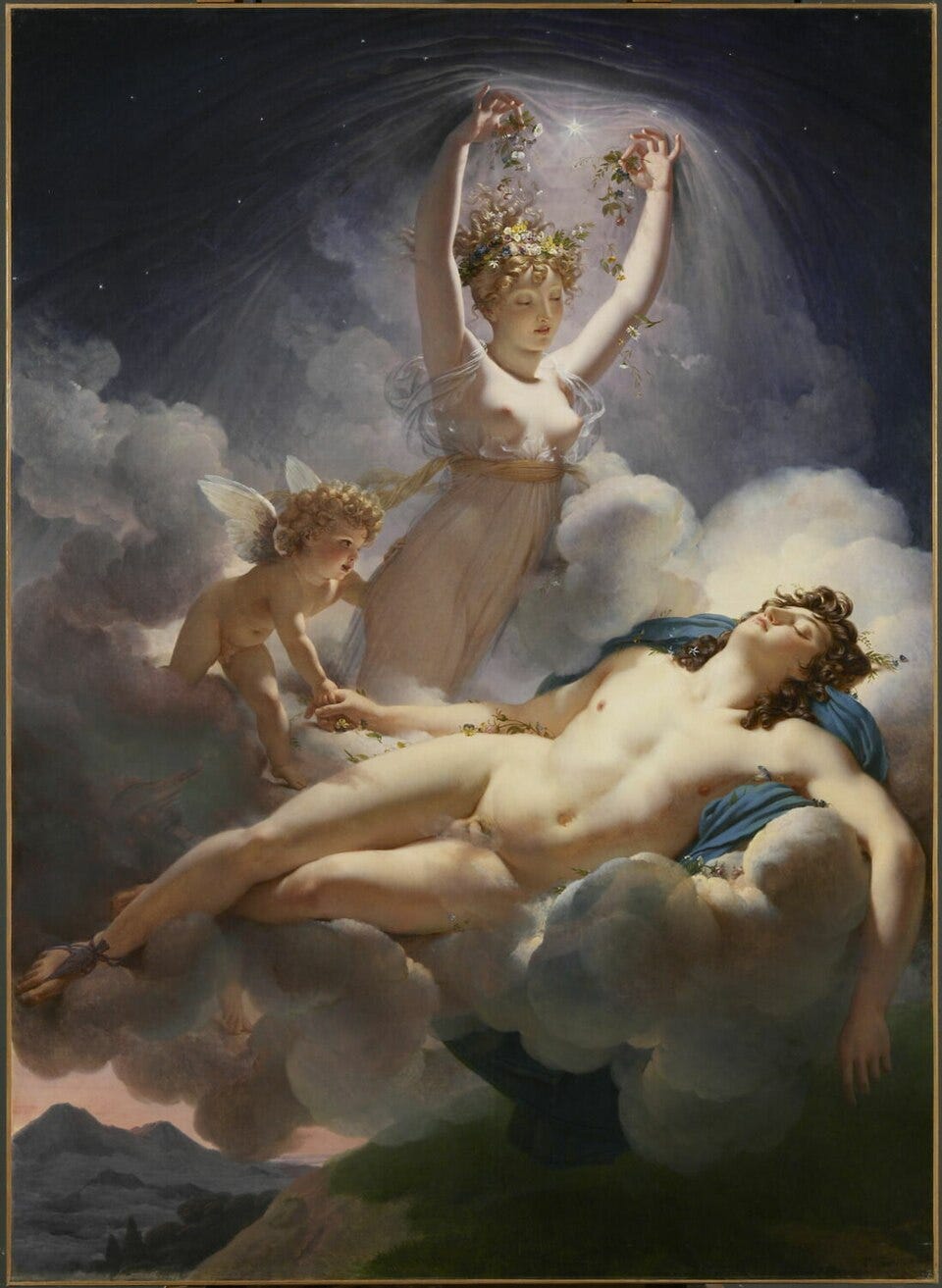
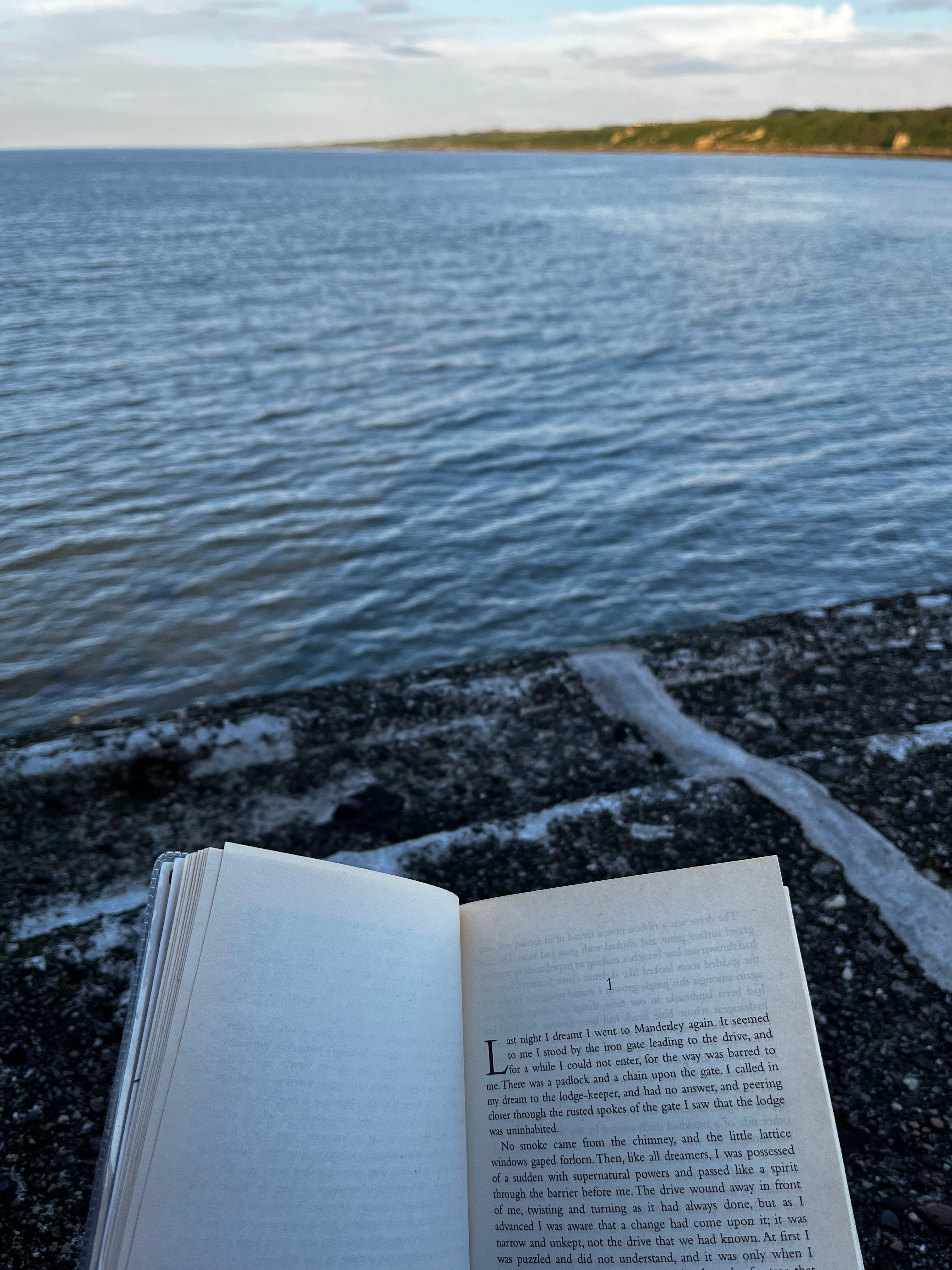
My reading theme this summer has been gothic. I love The Mysteries of Udolpho by Ann Radcliffe, with perhaps a shade less enthusiasm than Catherine Morland. Rebecca by Daphne du Maurier is perfect reading on the end of the pier. The Wyvern Mystery by J. Sheridan Le Fanu is great fun, and Frankenstein by Mary Shelley turns out to be my most theologically interesting novel of the summer. The Woman in White by Wilkie Collins awaits. Nothing can scare me! I haven’t seen nighttime since April!2
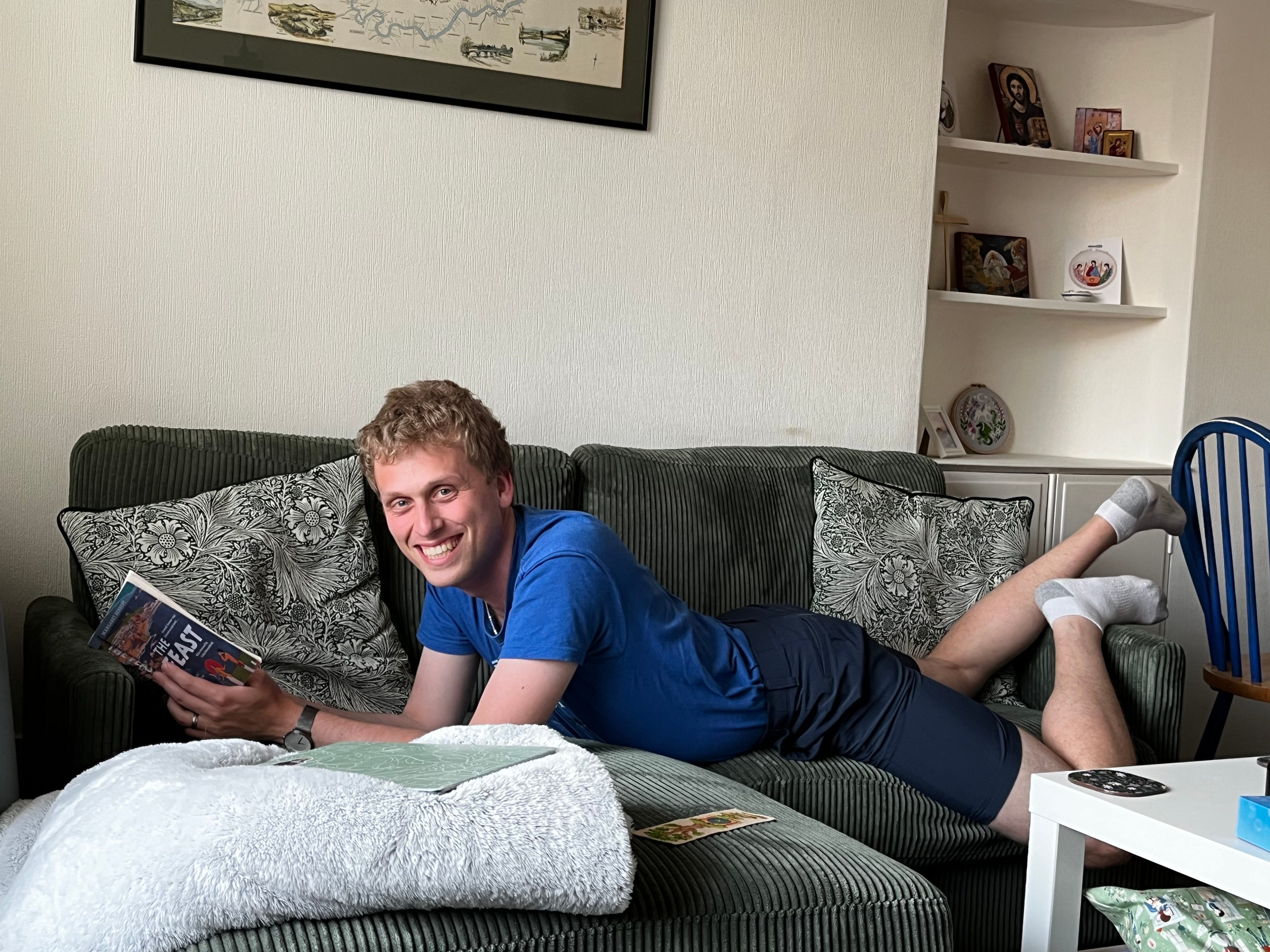
Recounting the plot of The Wyvern Mystery to my husband while we go on a fog-shrouded walk for our anniversary is great fun. He is such a good sport about me telling him, in the most convoluted way, about what I’m reading. Currently he is loving The Feast by Margaret Kennedy, about which I remarkably held my tongue.
I read and re-read: Busman’s Honeymoon by Dorothy L. Sayers, Gone-Away Lake and Return to Gone-Away by Elizabeth Enright, The Greengage Summer by Rumer Godden.
Inspired by The Feast I map the seven deadly sins onto the characters of Mansfield Park:
Pride: Mary Crawford
Envy: Mrs Norris
Gluttony: Rev Grant
Wrath: also Mrs Norris
Lechery: Maria Bertram
Covetousness/Greed: Henry Crawford
Sloth: Lady Bertram
How precious is your steadfast love, O God!
All people may take refuge in the shadow of your wings.
They feast on the abundance of your house,
and you give them drink from the river of your delights.
For with you is the fountain of life;
in your light we see light.
Psalm 36:7-9 NRSVUE
Most nice days, my husband and I eat lunch in the cathedral ruins across the street from my office. We track the restoration works keeping the ruins standing. The seagulls provide us with quality entertainment: territorial squawking couples, enterprising would-be thieves, and juveniles testing their wings on the high walls.
By the library, I watch the promenade of a seagull, conceited with his ill-gotten gains, who has scalped an entire cheese toastie from a luckless soul.
When I look out on such a night as this, I feel as if there could be neither wickedness or sorrow in the world; and there would certainly be less of both if the sublimity of Nature were more attended to, and people were carried more out of themselves by contemplating such as scene.
Jane Austen, Mansfield Park, vol. 1, chapter 11

“Suppose my child asks me what the fairytale means, what am I to say?”
If you do not know what it means, what is easier than to say so? If you do see a meaning in it, there it is for you to give him. A genuine work of art must mean many things; the truer its art, the more things it will mean. If my drawing, on the other hand, is so far from being a work of art that it needs THIS IS A HORSE written under it, what can it matter that neither you nor your child should know what it means? It is there not so much to convey a meaning as to wake a meaning.
George MacDonald, preface to The Light Princess and Other Fairy Tales (G. P. Putnam’s Sons, New York, 1893), vii.
My walk from home to office is exactly the length of Nina Simone’s “Sinnerman.”
Work continues on my studies. It’s quieter in my office, and I spend a good chunk of time re-reading and scanning poetry for my current chapter. I have also reached the coveted stage of my PhD where I am being paid to read novels. Is this real? I wolf down Alice Thomas Ellis and Muriel Spark and Rumer Godden as the good Lord intended.


I make plans for later in the summer: my college best friend visiting (high tea and crafting shenanigans), my parents and in-laws coming to stay, a research trip with a long-awaited side quest for a scissor arch and gray books (IYKYK!).
In between, the days slip by with their own small joys: cups of floral green tea, celebrations of saints, barbecue chicken sandwiches, video calls with long-distance friends, a vase of sunflowers, walks by the seashore, long talks with friends, collecting sea glass, puzzles on rainy evenings.
I believe the nicest and sweetest days are not those on which anything very splendid or wonderful or exciting happens but just those that bring simple little pleasures, following one another softly, like pearls slipping off a string.
L. M. Montgomery, Anne of Avonlea, chapter 19.
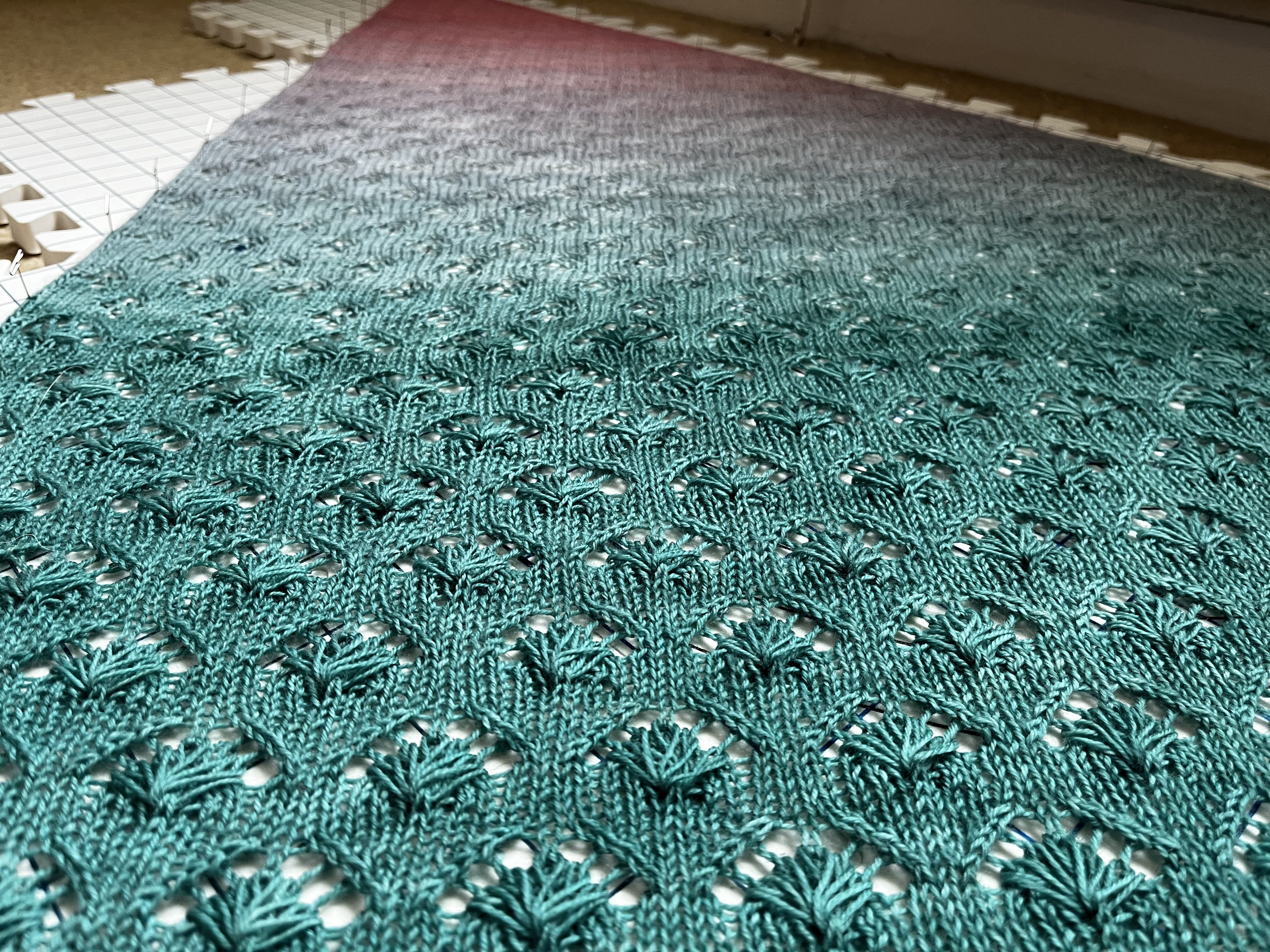
This yarn (alas, discontinued) and this pattern. Love how it turned out, and true to the Monet house color scheme. Here it is on the blocking mat:
It just doesn’t get pitch-black here in the summer; even midnight is bright as twilight. It’s our consolation for winter, when the night seems never-ending, and the sun’s office hours are from 8:30 AM to 3:30 PM.
Please keep your corner of the internet this lovely always! ✨
This was delightful, and somehow comforting to read. You sound like you really have an appreciation for the beauty of nature. Your Gothic reading reminded me of my own similar journey through that genre last Fall. I ended up reading the Mysteries of Udolpho, Rebecca, the Woman in White, the Moonstone, the Monk, Phantom of the Opera, and the Yellow Wallpaper. It was great.